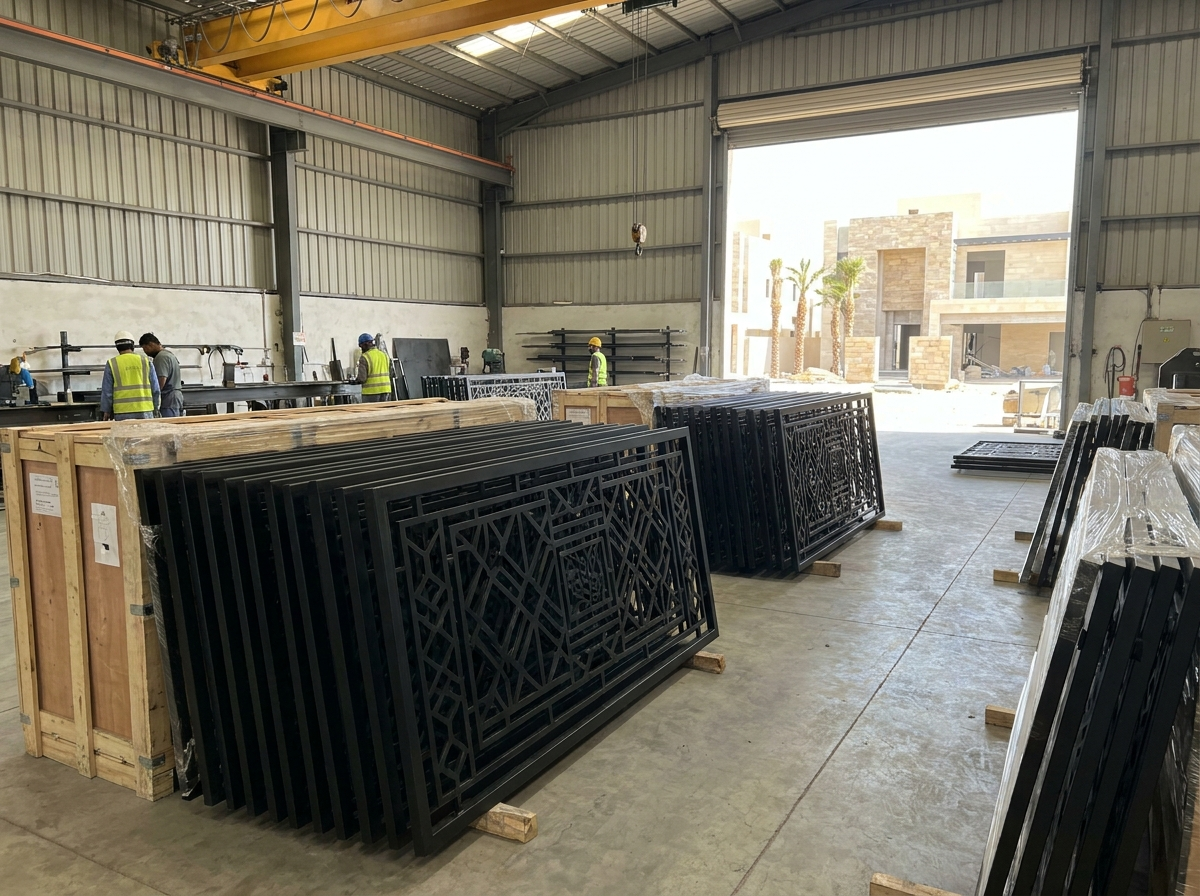
CNC Laser Cutting

Precision laser cutting is not defined by the machine, it is defined by the combination of the right technology, the right operator, and the right process discipline. At Nawat Al Tashkeel Al Madani, all three are in place. Our fiber laser cutting systems in Riyadh and Alqassim deliver cutting tolerances as tight as ±0.1mm, edge quality that eliminates secondary finishing on most applications, and the geometric capability to cut patterns of essentially unlimited complexity all from a digital design file, with no tooling costs and no minimum order quantity.
For Saudi Arabia's construction, manufacturing, and architectural sectors, this combination of precision, capability, and local availability represents a significant step forward from what was previously possible through local fabrication suppliers.
Get a Laser Cutting Quote in 24 HoursWHY FIBER LASER TECHNOLOGY IS THE RIGHT CHOICE FOR YOUR PROJECT
Not all laser cutting is equal. The type of laser, its power level, the condition of its optical system, and the expertise of its operators all determine the quality of the finished cut. At Nawat Al Tashkeel Al Madani, we use fiber laser technology, the current industry standard for metal cutting and we invest in maintaining it and operating it correctly.
Fiber lasers generate their cutting beam through a rare-earth doped optical fiber rather than the gas medium used in CO2 lasers. This produces a beam at a wavelength (typically 1,070nm) that metals absorb with exceptional efficiency meaning more cutting energy goes into the material and less is reflected or dissipated as heat. The practical results are faster cutting speeds on thin-to-medium thickness metals, smaller heat-affected zones that preserve material properties near the cut edge, and superior edge quality on reflective metals like aluminum, brass, and copper that CO2 lasers struggle with.
For clients, these technical characteristics translate into better finished work: cleaner edges that often need no secondary treatment, reduced thermal distortion on thin materials, and consistent dimensional accuracy across every piece in a production run.
OUR LASER CUTTING CAPABILITIES
Industrial Sheet Metal Cutting
We cut a comprehensive range of metals: stainless steel (grades 304, 316, and others), mild steel, carbon steel, high-strength alloy steel, aluminum alloys, brass, and copper across thicknesses from thin decorative sheet through structural-grade plate. Our machines are configured for both precision small-feature cutting on thin materials and clean, accurate profiling on heavier sections.
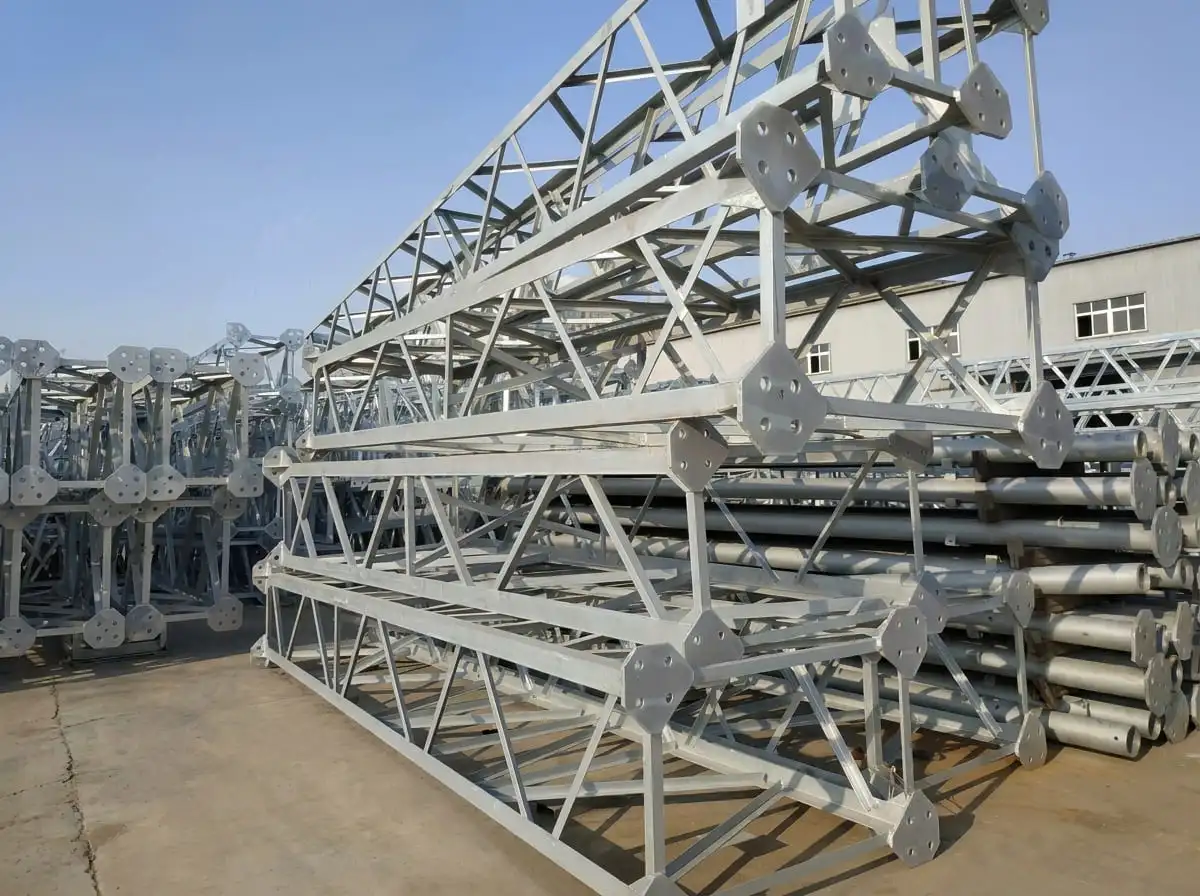
For industrial clients, we produce laser-cut blanks, profiled components, precision hole arrays, and custom profiles that become the starting point for welded assemblies, formed components, and machined parts. The accuracy of the laser cut reduces downstream processing time and improves the dimensional consistency of the finished assembly.
Complex Pattern and Decorative Cutting
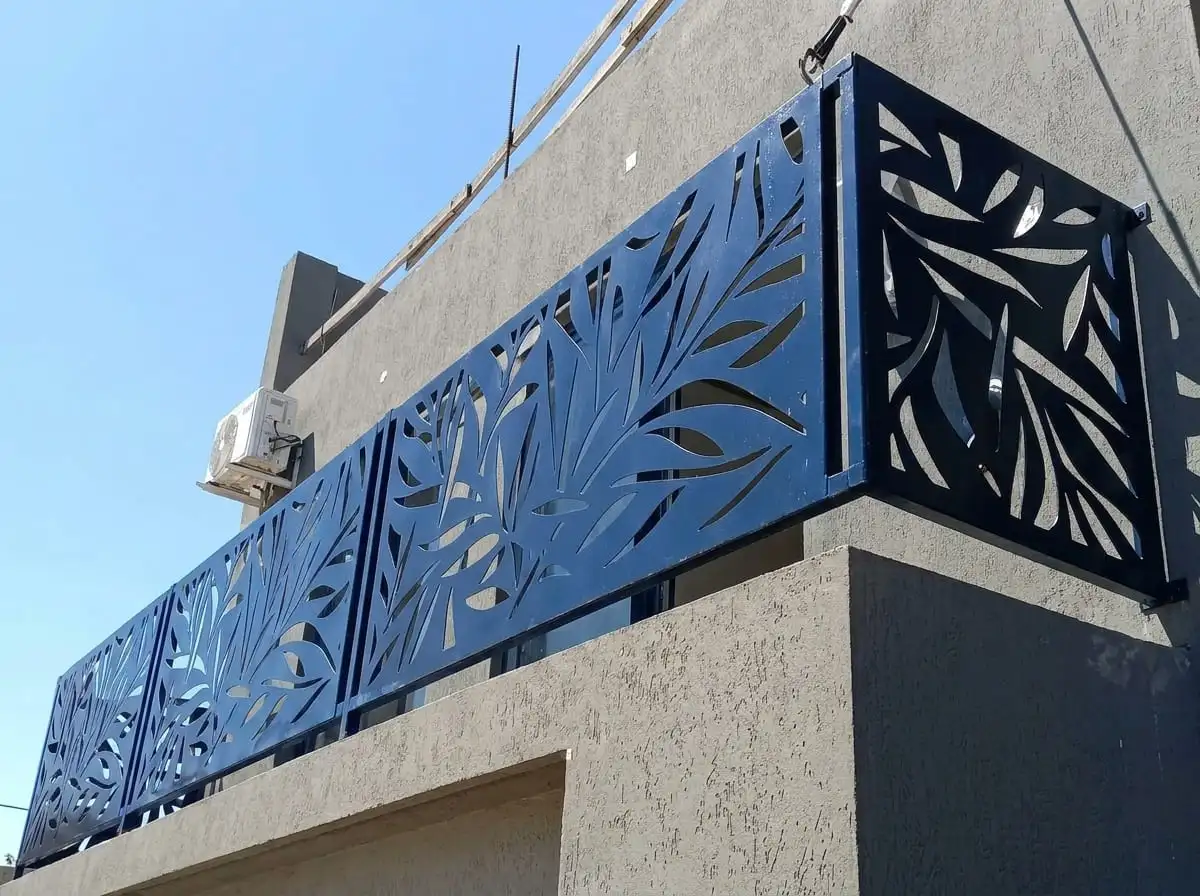
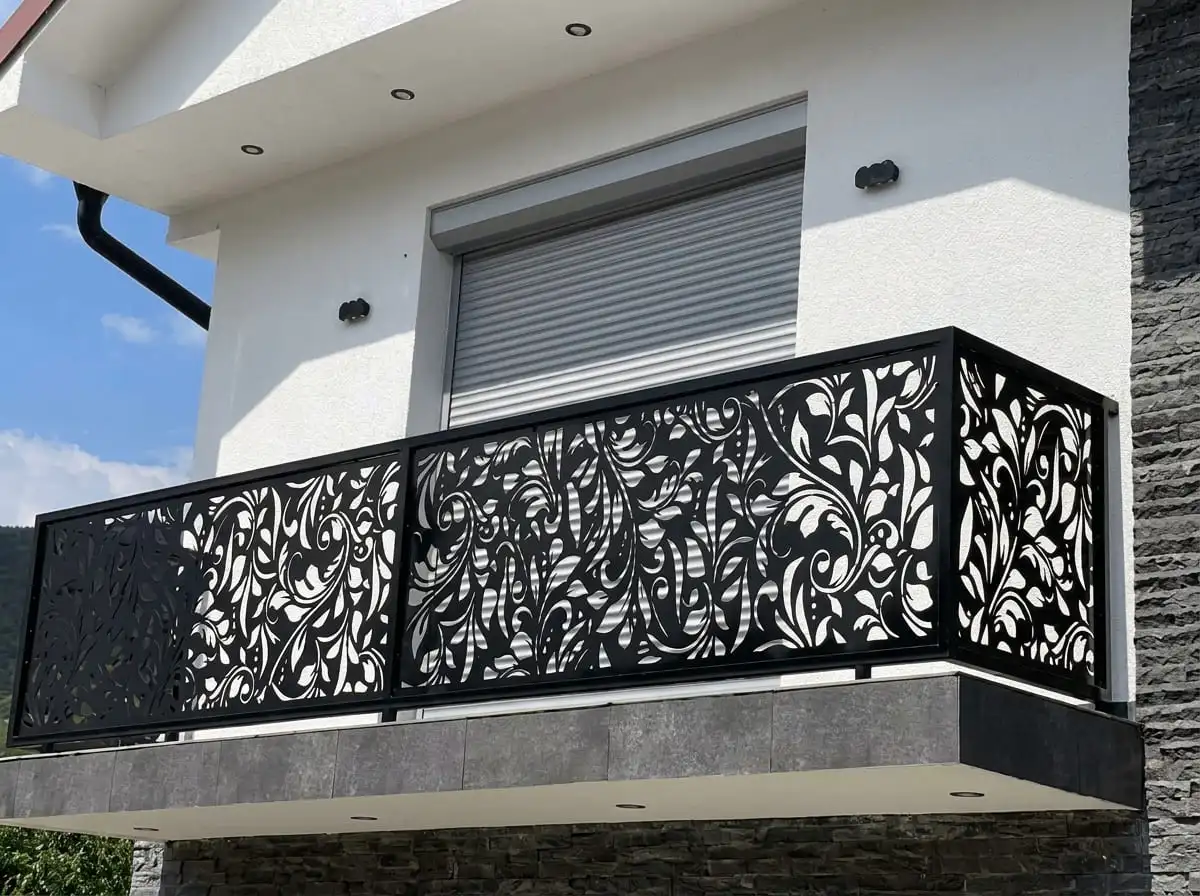
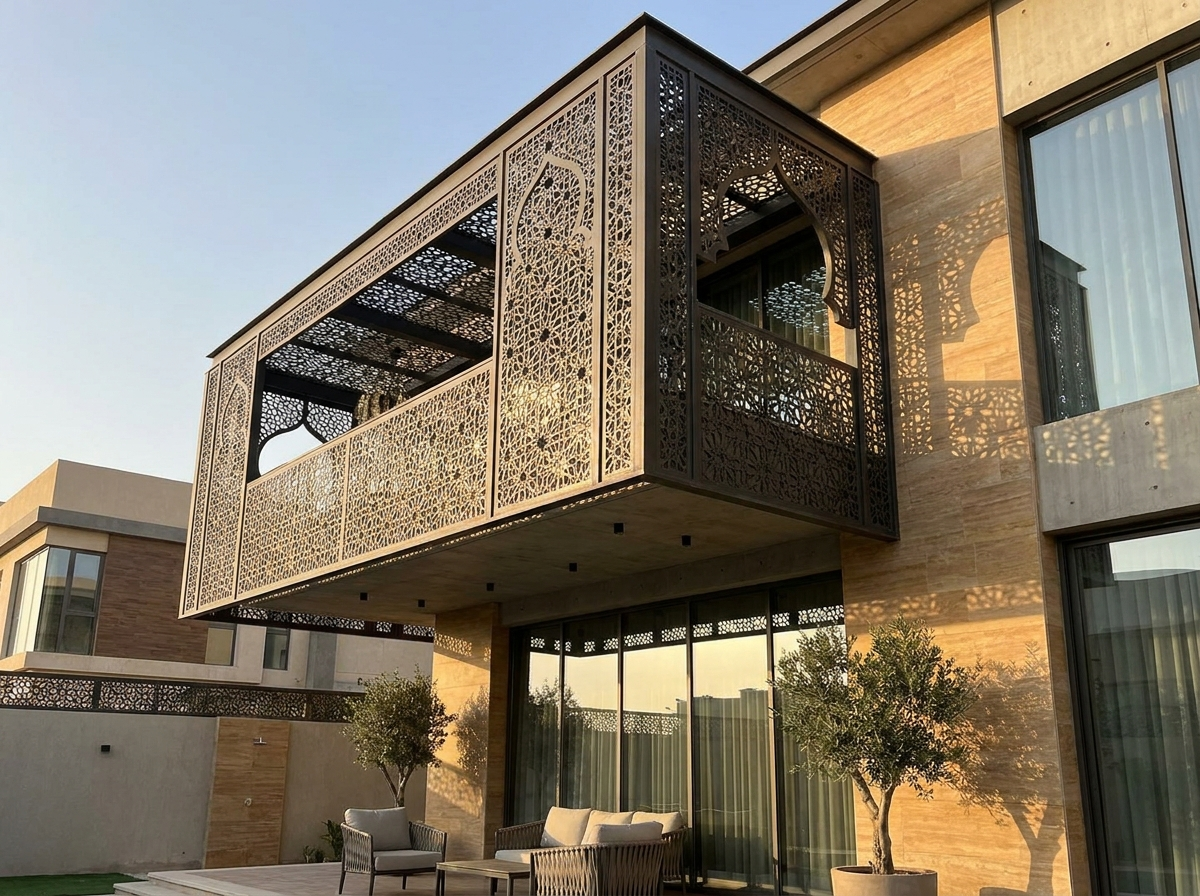
This is where fiber laser technology's capability most dramatically exceeds conventional cutting methods. Designs with hundreds of internal cut features, features with internal radii of 0.5mm, geometric patterns that tile across panels with sub-millimetre positional accuracy, Arabic calligraphic forms, and intricate mashrabiya lattices all of these are within the capability of our CNC laser systems, cut from a digital design file with no additional tooling or setup cost per feature.
We produce decorative panels for building façades, lobby screens, interior partitions, garden boundary features, mosque features, and custom artistic installations across Saudi Arabia. If the design can be expressed as a vector file, we can cut it with the same accuracy as a simple straight line.
High-Volume Production Runs
For clients with production requirements identical components needed in large quantities, consistently, over time our CNC laser systems deliver exactly repeatable results from the first piece to the last. Our automated nesting software optimises the arrangement of components on each sheet to minimise material waste and reduce cost per unit. For long-term supply relationships, we maintain programmes and settings to ensure consistency across multiple production batches over months or years.
Prototype and One-Off Custom Work
No minimum order. A single prototype component receives the same design file review, the same precision setup, and the same quality inspection as a batch of thousands. We understand that the prototype is often the most critical piece of all; it is the piece that either validates a design and unlocks a larger investment, or reveals an issue that needs to be resolved before production begins. We treat prototypes accordingly.